
The complete guide
Self-Closing Door Hinges, A Practical Buyer's Guide
The door that never stays shut
Every house has one. The pantry door that drifts open. The laundry door that lets the washing machine racket into the lounge. The door between the garage and the kitchen that somebody left ajar again, so cold air rolls in all afternoon. You can nag about it, or you can make the door do the work itself.
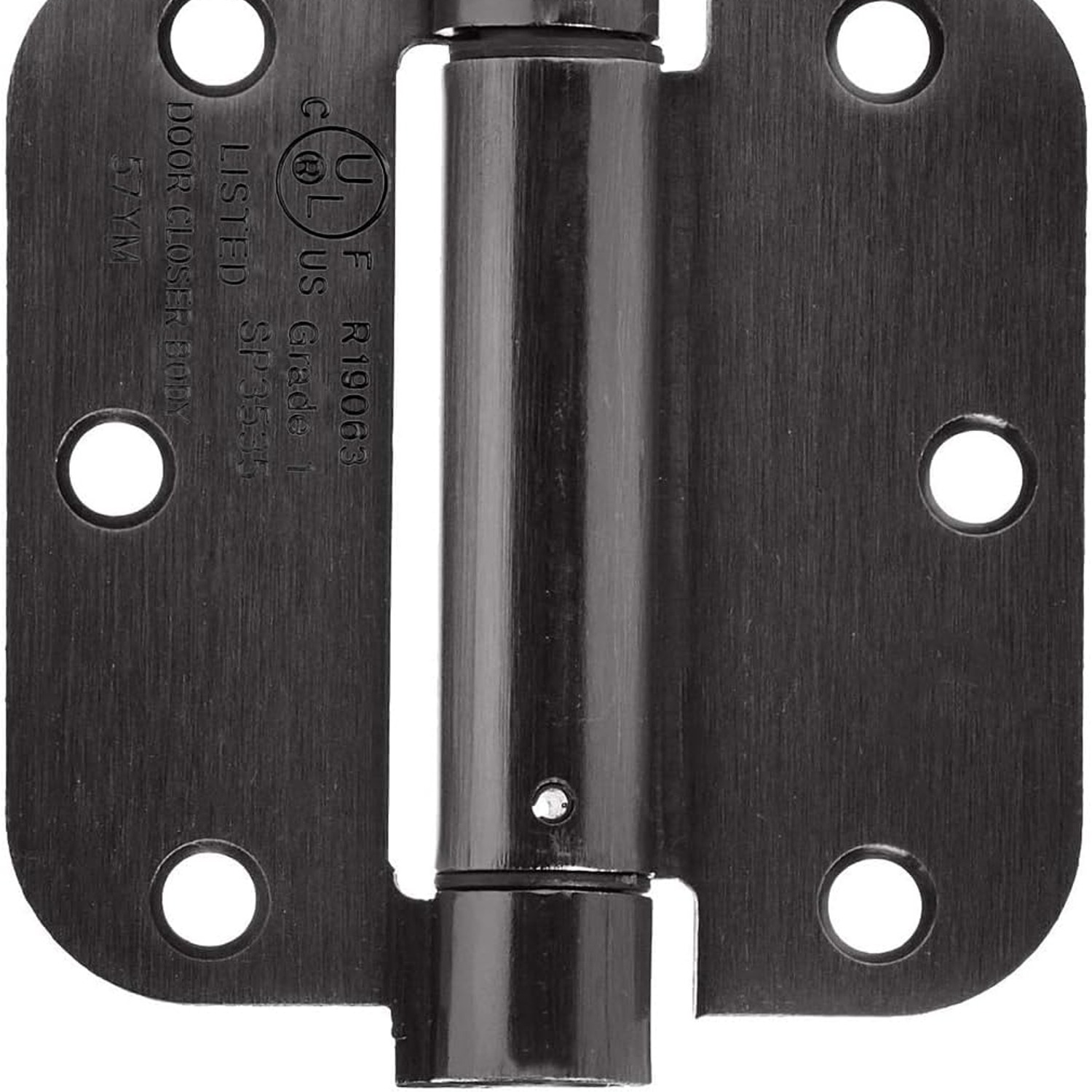
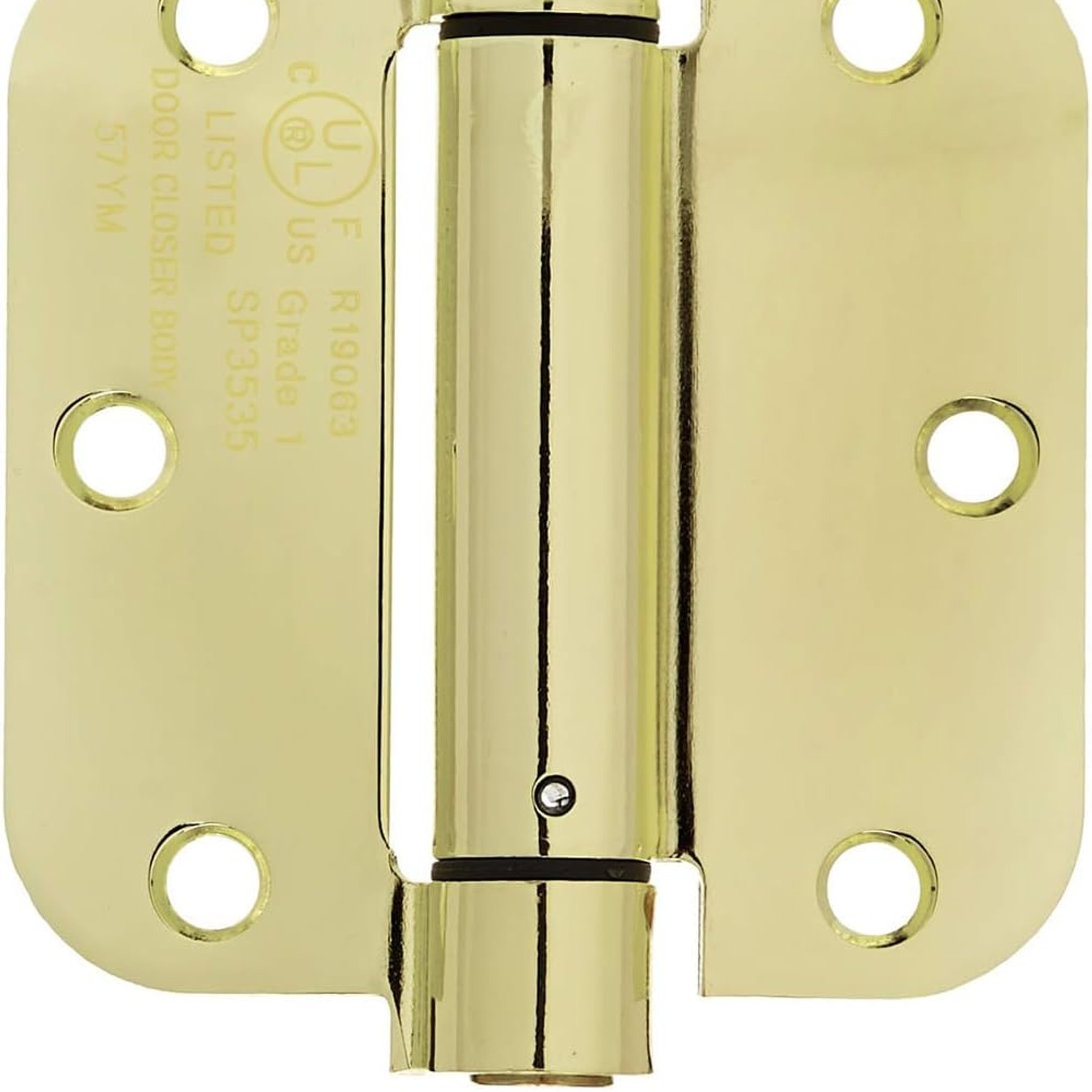
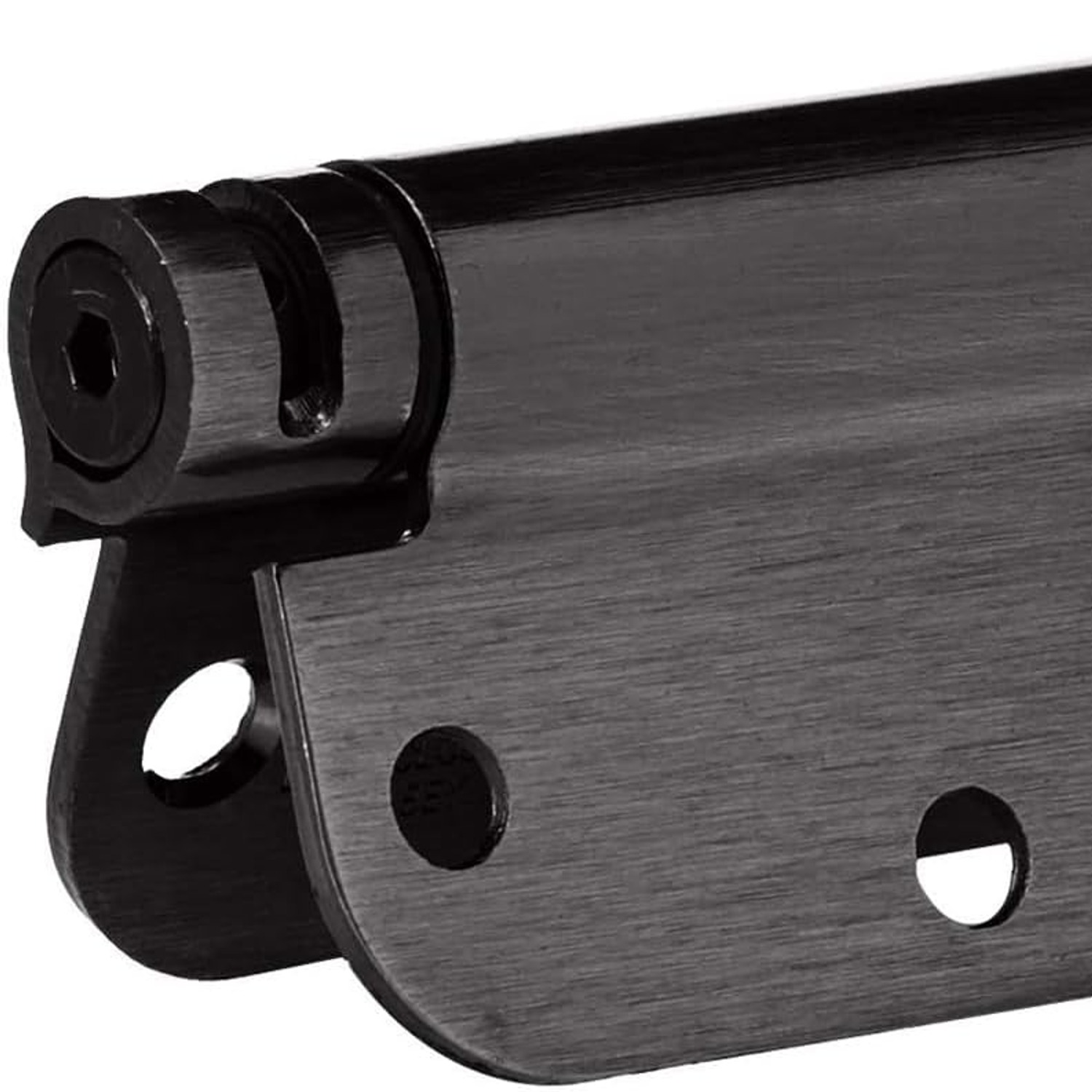
That is the whole job of a self closing door hinge. A spring lives inside the hinge barrel. Open the door, the spring winds up. Let go, it unwinds and swings the door back against the frame. There is no arm bolted across the top of the door, no bracket on the wall, no plastic box in your eyeline. From a step back it looks like a normal hinge, because it mostly is one.
For a lot of household doors, this is a better answer than a full door closer. Closers are great on heavy commercial doors and on anything where the law demands them. On a hollow-core interior door in a family home, they are overkill, they look industrial, and they cost a lot more.
How a spring hinge works
Inside the barrel sits a coiled spring, held under tension between the two leaves. When the door opens, the leaves rotate apart and the spring loads. Release the door and that stored energy turns the leaves back toward each other, dragging the door home.
The force is constant through the swing, unlike a hydraulic closer that eases off at the end. So a spring hinge returns a door briskly rather than gently. On a light door that can feel snappy. The fix is simple and it is why people buy single hinges rather than sets: use fewer spring hinges, and the swing calms down.
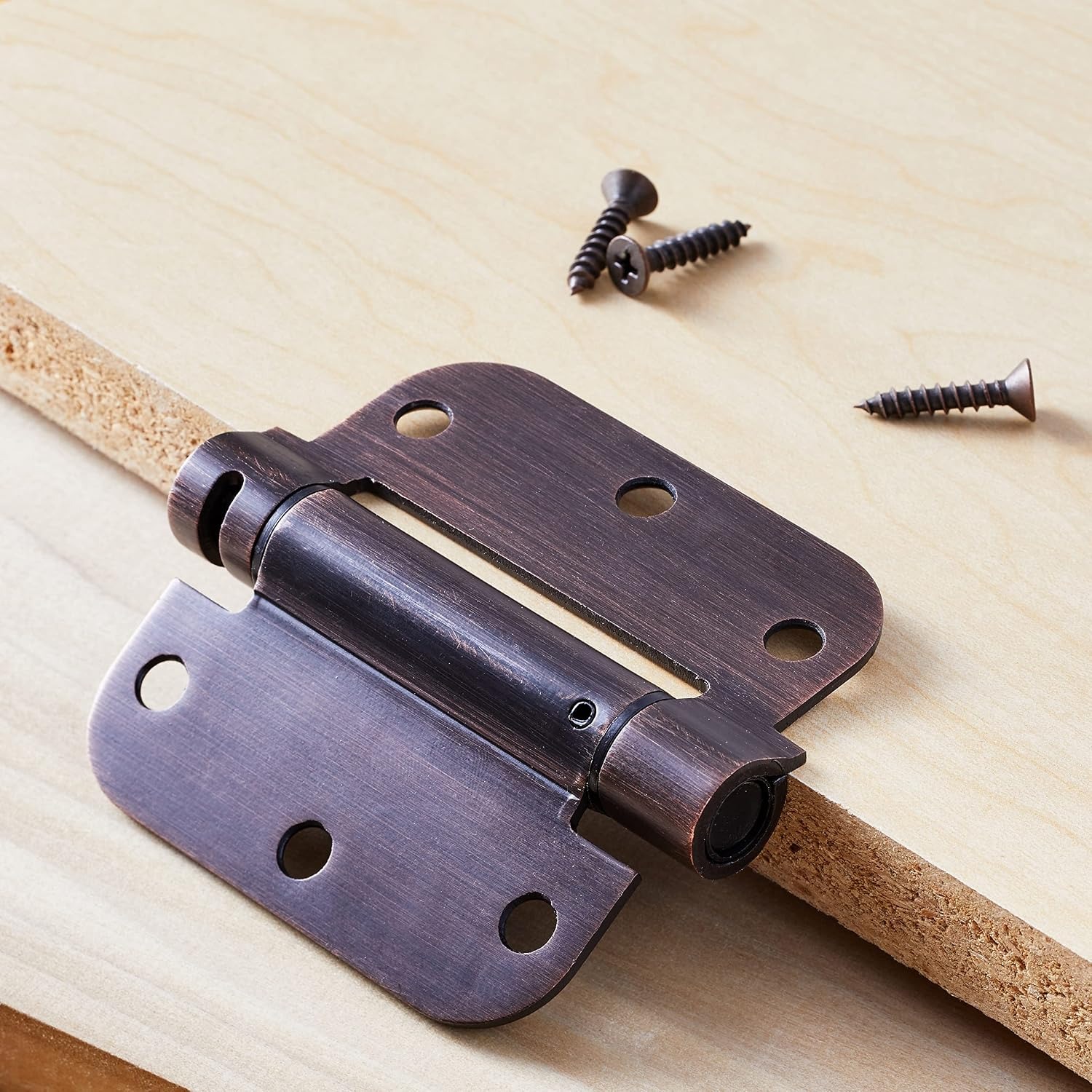
Some spring hinges include an adjustment so you can wind the tension up or down. That feature is not listed in the details we hold for this model, so treat it as unconfirmed rather than assumed. What is confirmed is the construction, alloy steel, and the finish, oil rubbed bronze applied by hand.
Size is the first thing to check
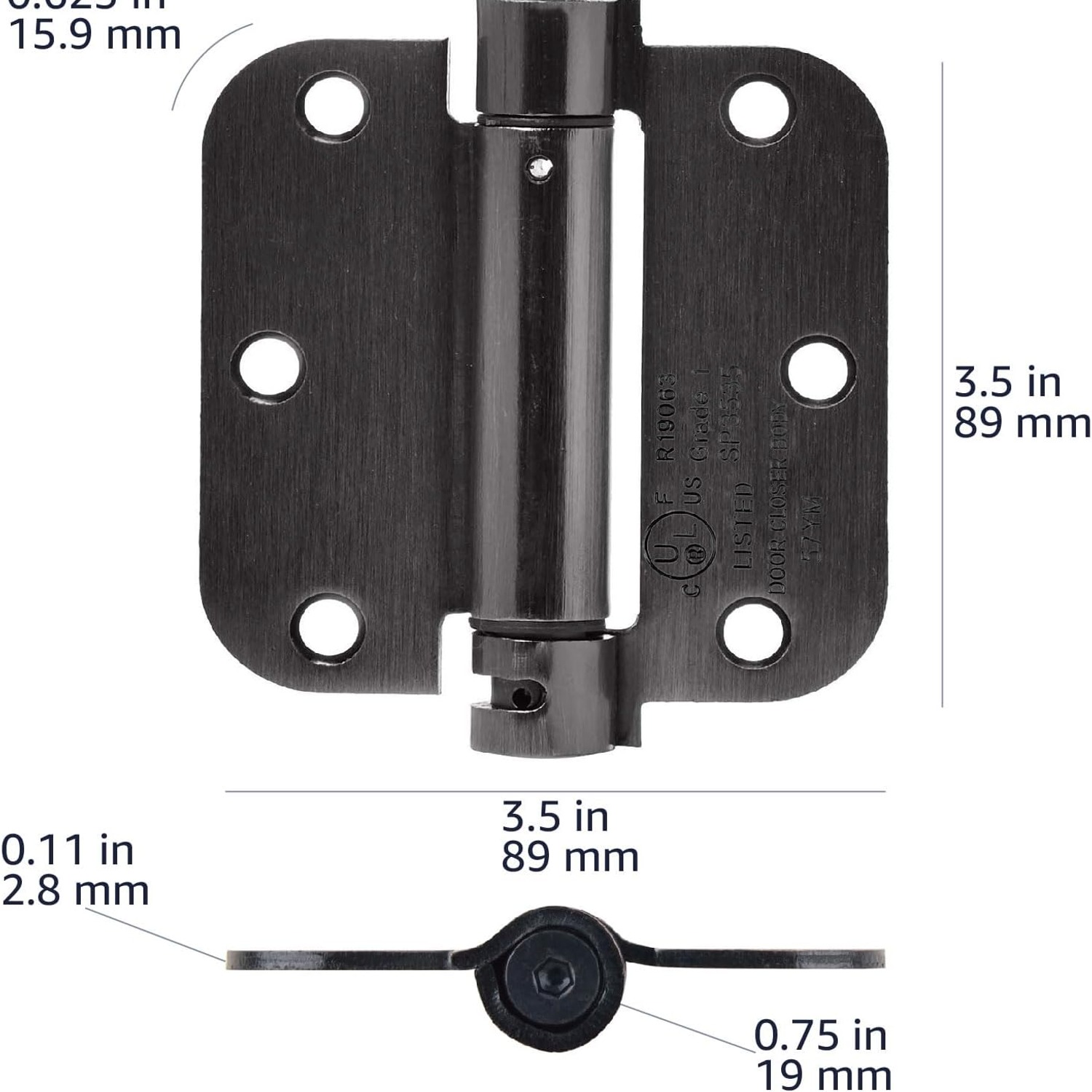
This hinge is 3.5 inches by 3.5 inches, or 8.9 cm square. That size dominates standard interior doors across a lot of housing stock, which is why it is the sensible default.
Before you order anything, go and look at the hinge already on your door. Measure the leaf height and width with a tape. If it reads 3.5 inches or close to 8.9 cm, you are in the right territory. If it is 4 inches, this one will leave a gap in the mortise and the screw holes will not line up properly.
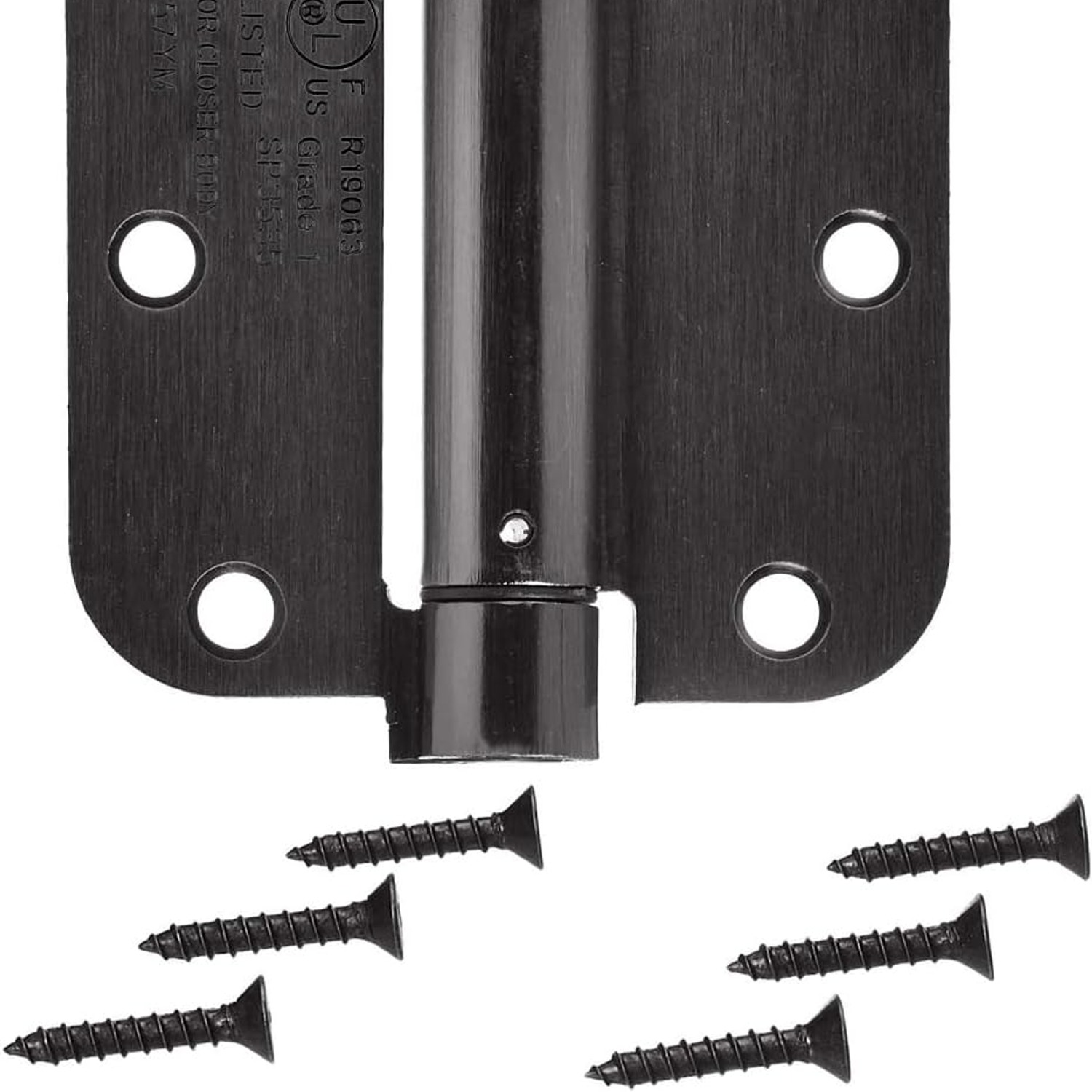
Count the screw holes too. Six is standard for this size, three in each leaf. Match the hole count and the leaf size and a replacement usually drops into the existing mortise with nothing more than a screwdriver.
The other variable is leaf thickness, which differs slightly between brands. A fraction of a millimetre either way can change how the door sits in the frame. Hang the door, check the swing and the latch, then drive the screws fully.
How many hinges should be spring-loaded
This is the question people get wrong most often. A standard interior door runs on two or three hinges. You do not need all of them to be self-closing.
Common practice is to make the top hinge the spring hinge. It has good use over the door and one spring is often enough for a light hollow-core door. If that door does not quite latch, add a second spring hinge at the bottom and leave the middle as a plain butt hinge.
Heavy doors are a different matter. A solid timber door, a wide door, or anything with a glass panel carries real weight, and one spring will struggle. Spread the work across two or more. Since this product sells as a single hinge, you buy exactly what the door needs with nothing left over.
A weight rating is not given in the maker's listing, so use judgement. If you lift the door off its pins and it feels like hard work, it is heavy enough to need more than one spring hinge.
Where these actually earn their keep
The pantry is a classic. A door that closes itself keeps the light out of the kitchen and stops the cat auditing the shelves.
Laundry doors come second. A closed door is the cheapest noise control in the house, and it only works if the door actually shuts.
The door between a garage and the house is a big one. In a lot of places that door is supposed to stay closed for safety and for keeping fumes out of living areas, and a spring hinge turns that from a habit into a default. Just note that if your local code requires a rated fire door assembly, hardware for it must be certified for that purpose, and that rating is not listed by the maker here.
Then there are the everyday ones. Playroom doors. A door at the top of the stairs. Office doors in a shared house. Shed and workshop doors where a light timber door needs to stop swinging in the breeze. For a light gate in a sheltered spot it can work too, though a boundary gate out in the weather deserves purpose-built hardware.
Choosing the finish
Oil rubbed bronze is a warm, dark finish with some depth to it. It sits well against timber doors, painted walls and both traditional and modern interiors. It is also forgiving: fingerprints and small scuffs show far less than they do on polished chrome or bright brass.
Because it is applied by hand, individual pieces can vary a touch in tone. Across a set from the same family that reads as consistency with character. If you are matching to an existing bronze lever from a different maker, expect close rather than identical.
Practically, the finish means very little maintenance. A dry cloth deals with dust. A barely damp cloth handles marks, dried off straight away. Keep abrasive pads, bleach and solvents away from it and it will hold up.
Fitting it yourself
For a like-for-like swap, this is a twenty-minute job for one person with one screwdriver.
Wedge the door so it cannot move. Work on one hinge at a time, leaving the others holding the weight, and the door never comes off. Back out the screws, lift the old leaf out, set the new hinge in the same mortise and start the screws by hand before tightening them. Check the swing, then move to the next.
If you are cutting a fresh mortise into a door that never had one, that is a bigger job. Mark the leaf outline with a pencil, pare out the recess with a sharp chisel until the leaf sits flush, and drill pilot holes before driving screws so the timber does not split.
Once fitted, test the close a few times. If the door hits the frame harder than you like, a stick-on silicone bumper on the stop face softens the landing. If it does not quite latch, the usual causes are a misaligned strike plate or not enough spring, and both are easy to sort.
Living with it
Spring hinges are low drama. The two things that eventually need attention are screws and squeaks. Screws loosen over years of swinging, so check them when you think of it and nip up anything loose. A squeak is almost always a dry knuckle, and one drop of light machine oil fixes it.
Keep an eye on alignment too. If a door starts dragging on the frame, that is usually the door or frame moving with the seasons rather than the hinge failing.
The short version
A self closing door hinge is a quiet, cheap fix for a door that will not stay shut. This one is 3.5 inches square, alloy steel, finished in oil rubbed bronze, with six screw holes and the mounting screws in the box. It sells as a single hinge, so you buy the exact number of spring hinges your doors need.
Measure your existing hinge before you order. Start with one spring hinge on light doors and add a second if the latch does not catch. Keep more hardware on heavy doors. Then enjoy walking away from the pantry without looking back.