
The complete guide
Choosing Folding Table Hinges for a Lift-Top Project
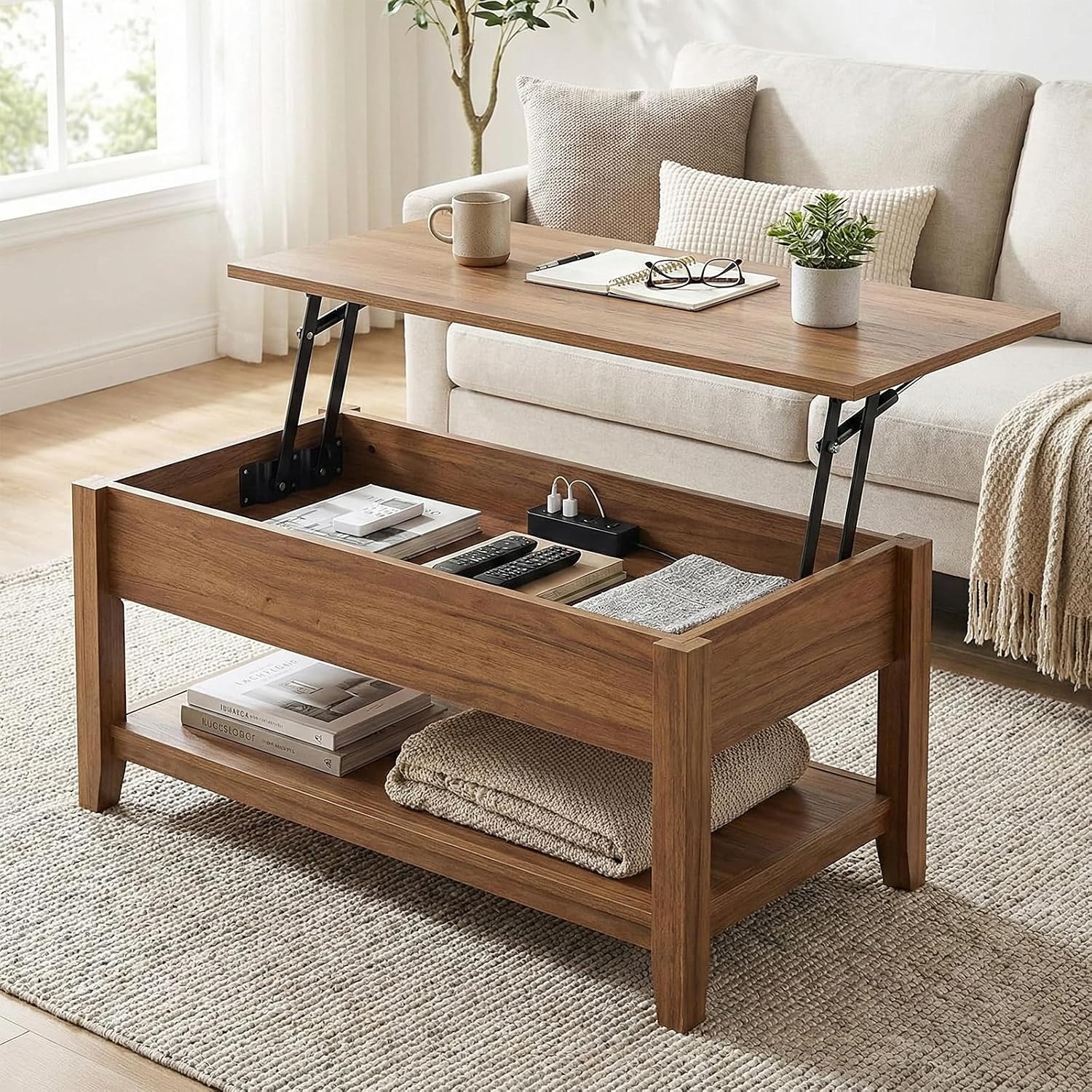
A low coffee table can be useful for books and drinks, yet awkward when you want a higher surface. Replacing the whole table is one option. Adding a lifting top may be another, provided the furniture is strong enough and the hardware is a good match.
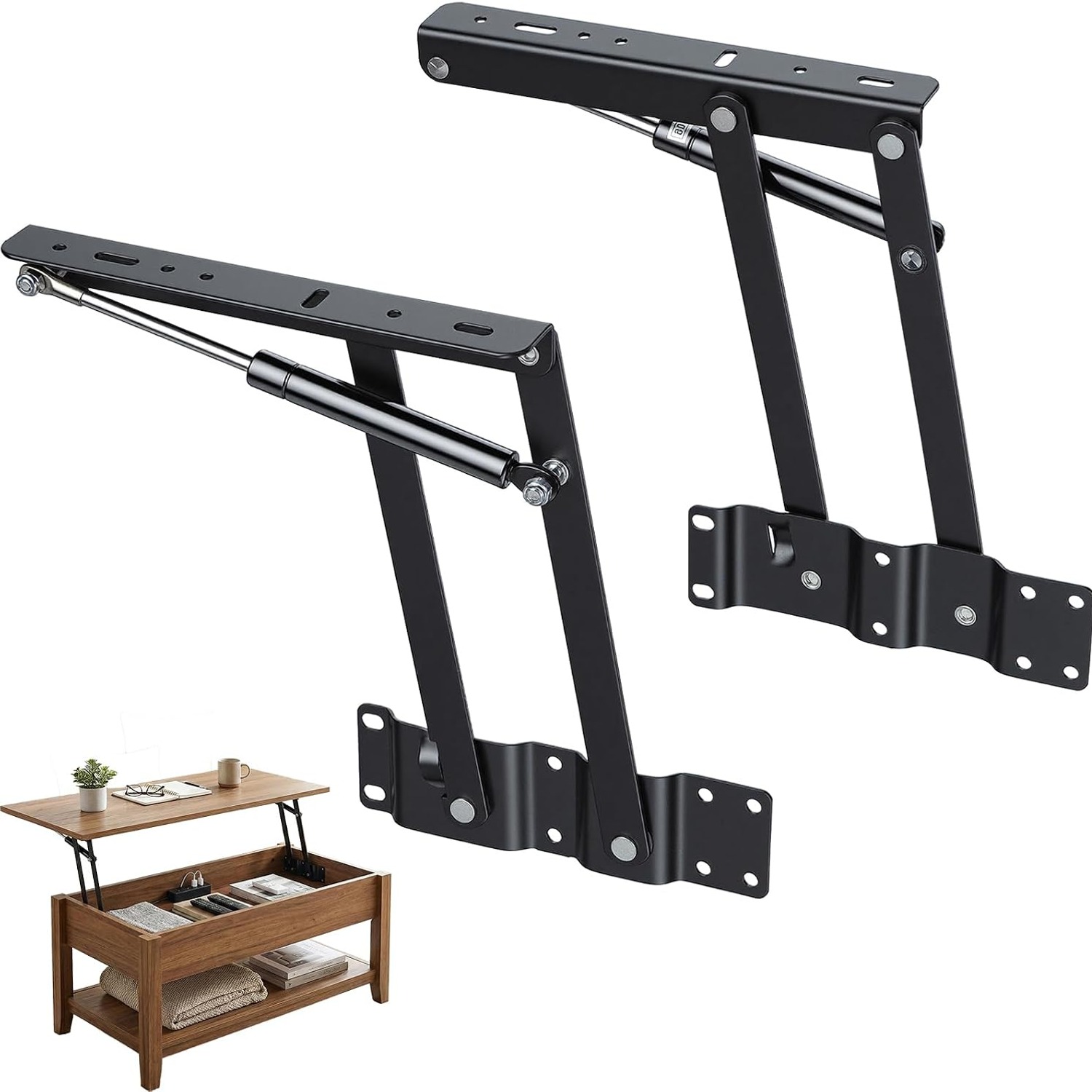
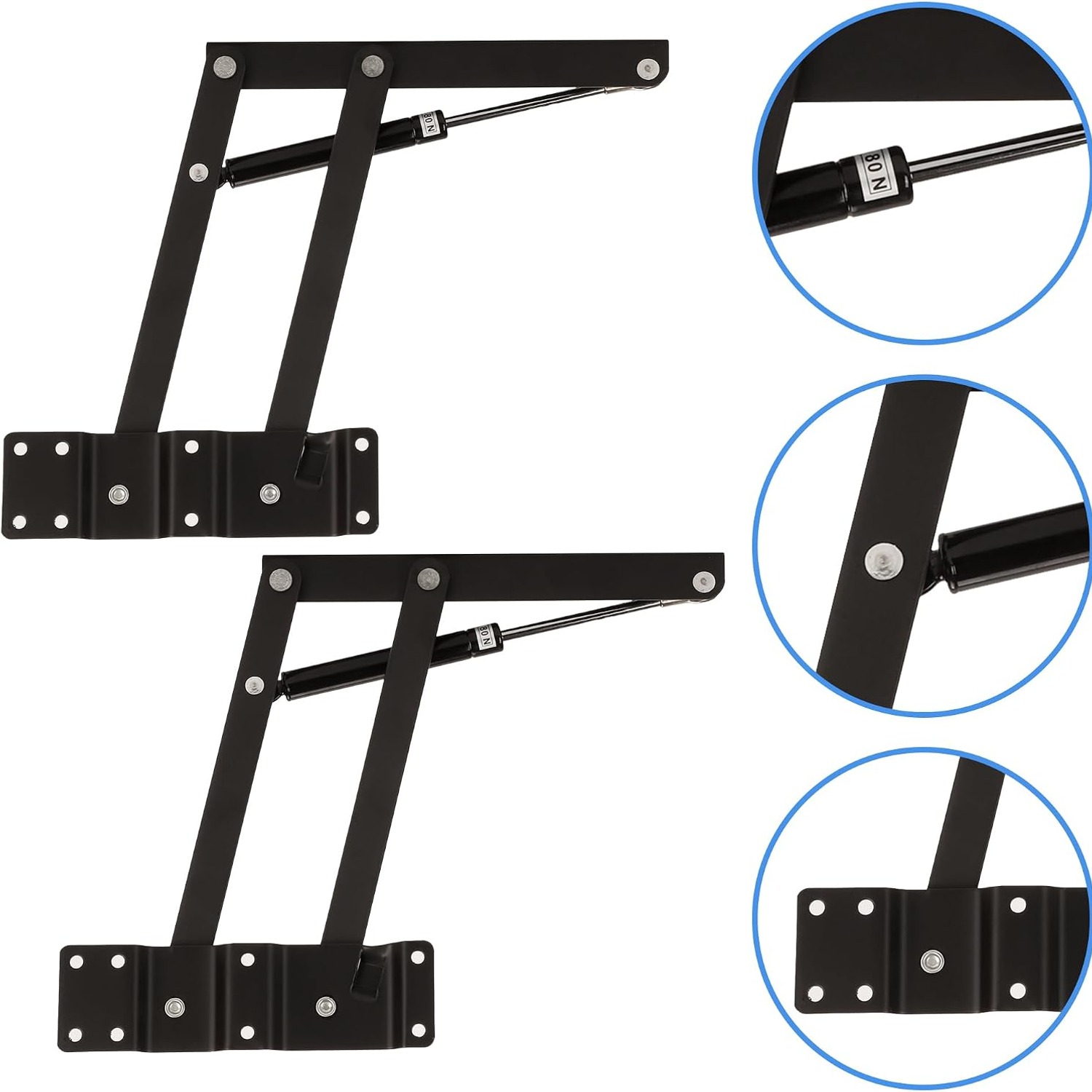
These AIWFL folding table hinges are a pair of lifting frames for that kind of project. They are not a ready-made conversion kit with every fitting confirmed. Choosing them starts with a careful look inside your table, not just a glance at its outside size.
This guide explains what the listing tells you, what still needs checking and how to decide whether this style of hardware belongs in your project.
What this hardware is designed to do
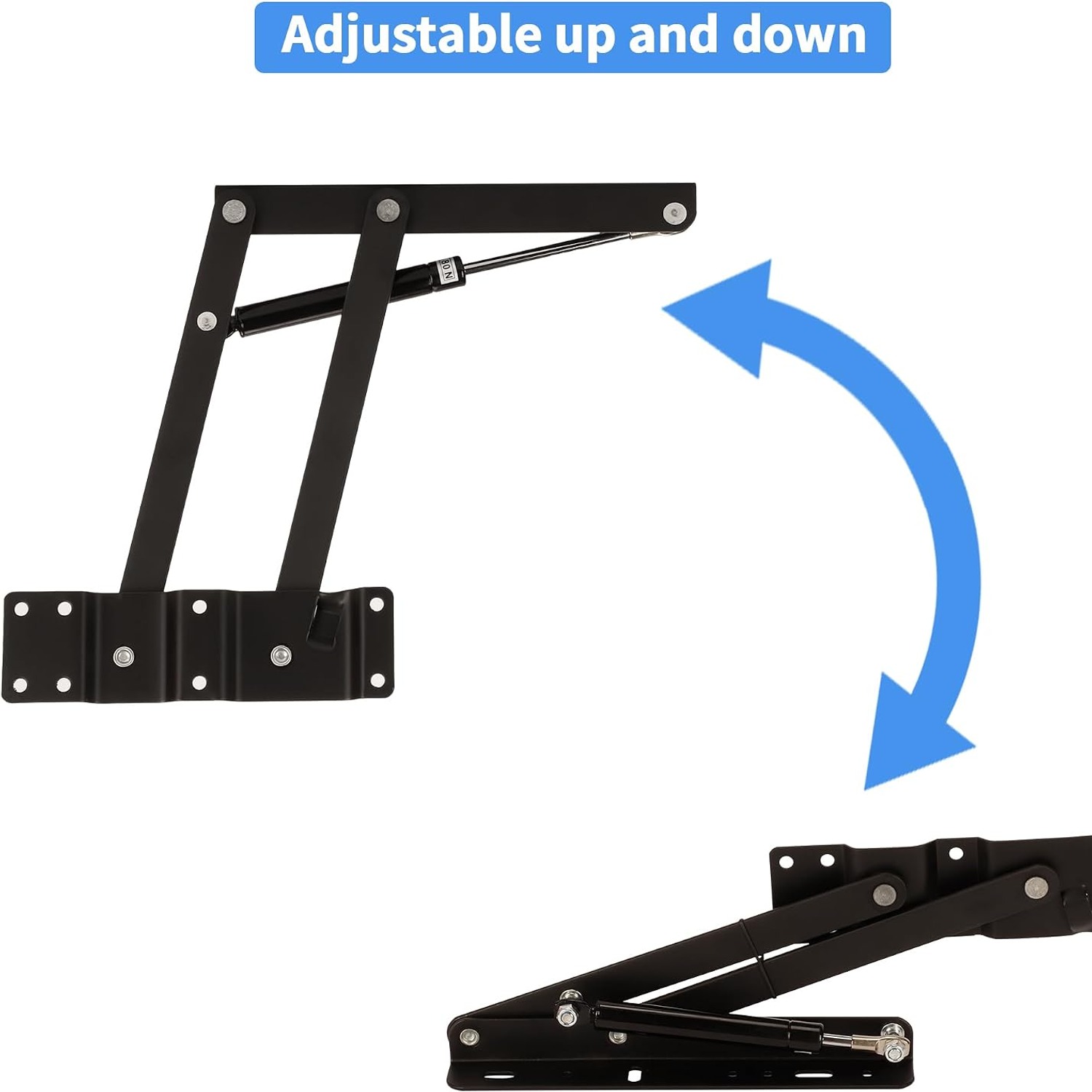
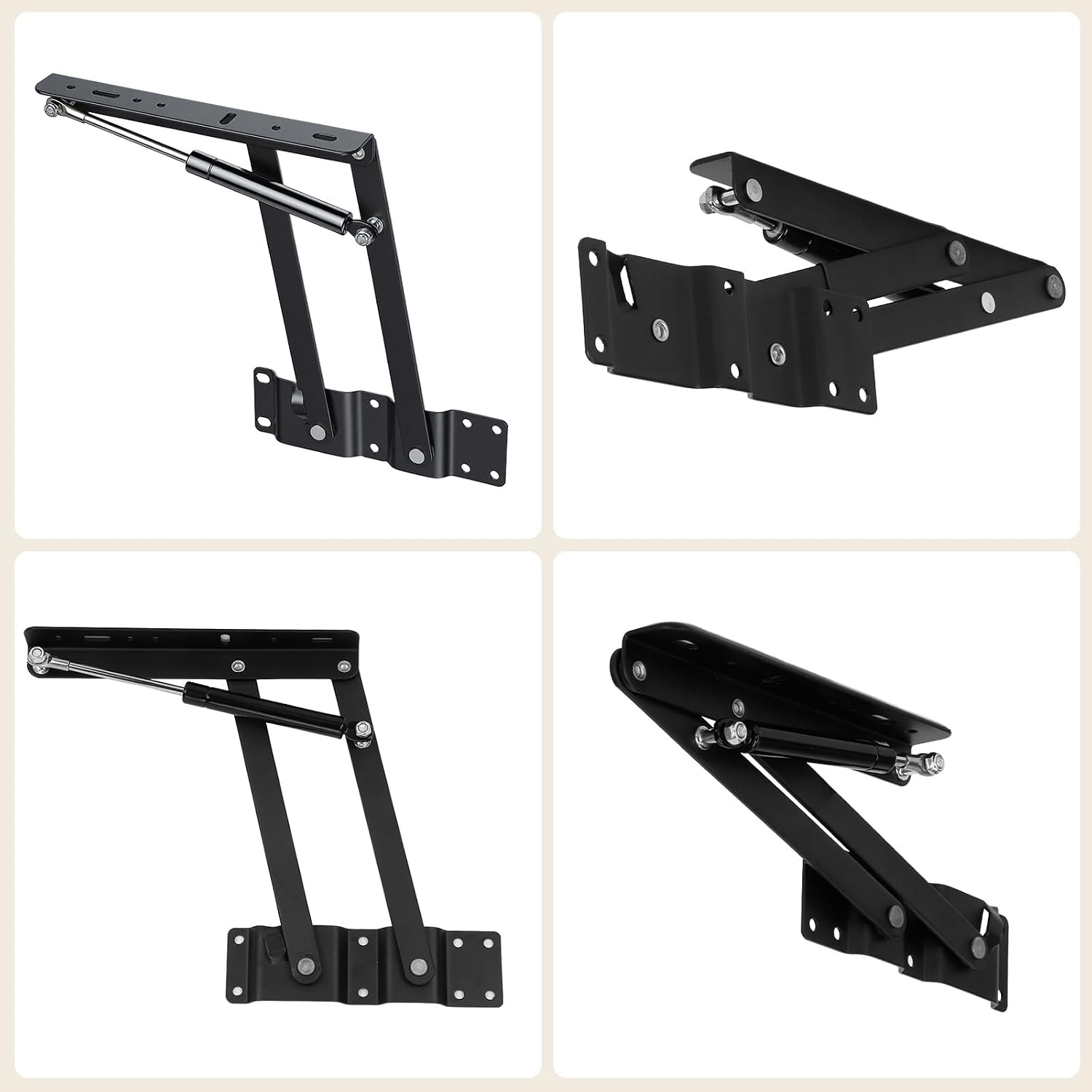
A coffee table lift mechanism allows a compatible tabletop to move away from its closed position and sit higher. The frames attach to suitable parts of the table and top. Their movement changes where the top sits in relation to the base.
That is different from a simple hinge along one edge. Ordinary hinges mainly let a panel rotate. Lift-top hardware is intended for a raised tabletop arrangement, so it needs room for its moving parts as well as secure fixing points.
The supplier names coffee tables, tea tables, computer tables and classroom desks as possible uses. Treat these as starting points for checking fit. They are not a promise that the frames will suit every piece of furniture in those groups.
The package is described as a pair of lifting frames. No tabletop or table base is included.
Read the measurements in the right way
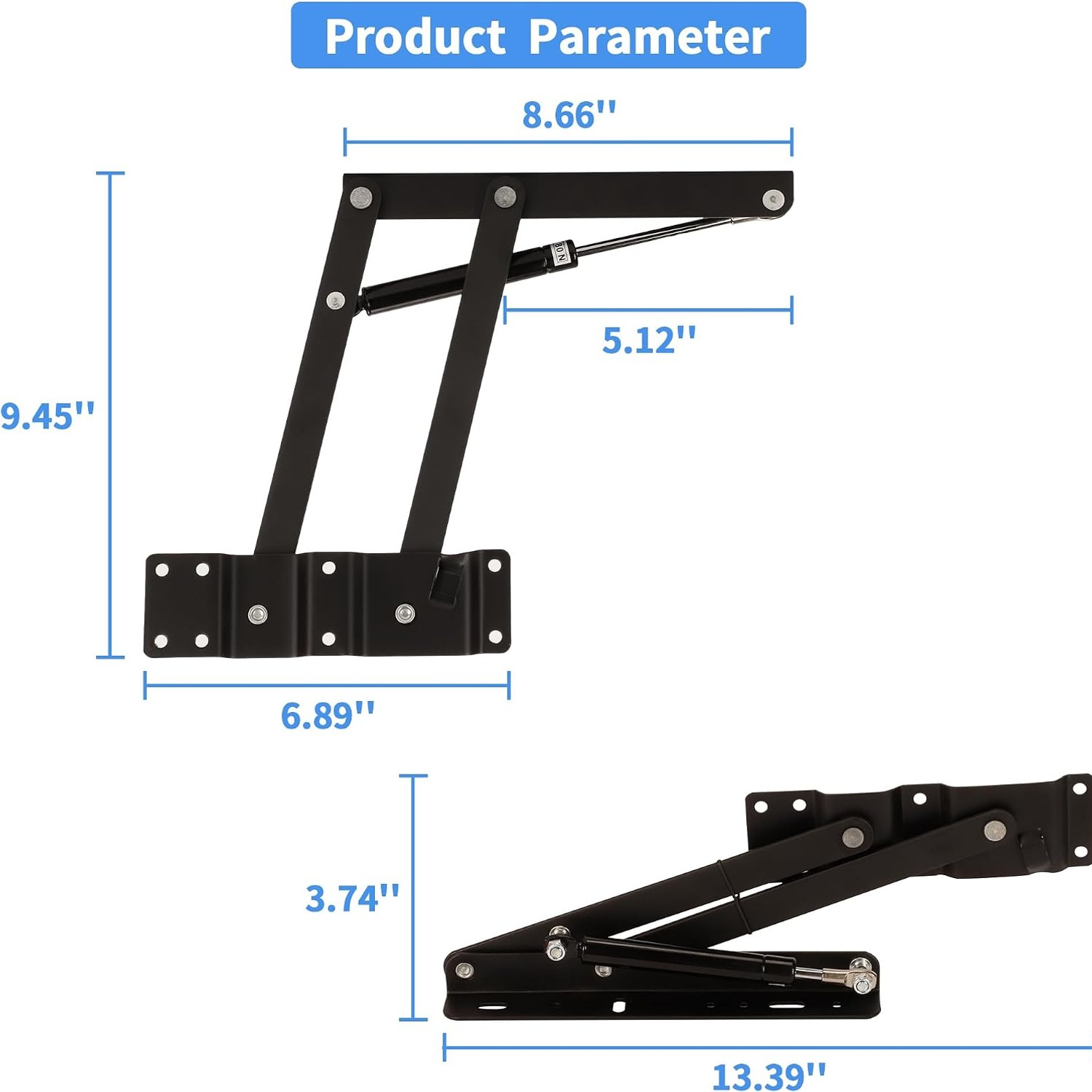
The product details list dimensions of 34 cm long by 9.5 cm wide. The supplier also gives folded measurements of 13.39 inches long and 3.74 inches wide. These are useful figures for an initial space check.
They are not a full installation drawing. The maker does not give a complete mounting-hole pattern, folded thickness or swept path. A mechanism may fit inside a table when closed yet still meet an obstruction as it moves.
The stated raised height is 9.45 inches. Do not read that as the final height of your work surface above the floor. The table base, top thickness and mounting arrangement also affect the finished position.
Before choosing lift top coffee table hardware, measure the clear space inside the furniture. Include rails, corner blocks, drawer parts and any other pieces that could get in the way.
Start with the table, not the hinges
A successful conversion depends on the furniture that holds the mechanism. Look closely at the table frame and the underside of the top. Both need suitable places for secure attachment.
Check for loose joints, splits, old repairs and damaged screw holes. A table that feels firm with a fixed top may behave differently once that top moves. Do not assume its original construction is suitable for a lift-up arrangement.
The tabletop itself matters too. Its weight and size affect the demands on the hardware and the base. A broad top can also extend well beyond its support points when raised.
If you are unsure about the structure, show the table to a cabinetmaker or furniture repairer. Getting advice before drilling is usually simpler than trying to repair a poor mounting position later.
Understand the missing load rating
The listed item weight is 1.5 kg. That describes the hardware, not how much it can lift or support.
No numerical load capacity is supplied. This is an important gap, especially if your project uses a heavy top or is intended to hold equipment. General supplier claims about strength cannot replace a stated working limit.
Ask for the supported tabletop weight and any limits on items placed on the raised surface. Those are separate questions. The mechanism must work with the top itself before you consider the extra things you want to put on it.
The best coffee table conversion hardware for a project is hardware with a confirmed fit and suitable load rating. A close visual match is not enough.
Check the mounting layout
These are listed as surface mount table hinges. That tells you the mounting style, but it does not identify the right screws for your furniture.
Fixing choice depends on the mounting holes, the material receiving the screws and the available thickness. A screw that is too long may damage the visible face. One that is too short may not provide enough hold.
The included-components list confirms a pair of frames only. Do not plan on receiving screws, tools or a drilling template unless these are confirmed separately.
For replacement work, compare the old hardware carefully. Replacement coffee table hinges need to match the closed position, fixing layout and movement path, not merely the frame length. Existing holes may be unsuitable even when the new frames look similar.
Think about the open position
The raised top needs to work with the room as well as the table. Consider where you sit, how much knee space you need and whether the top would meet nearby furniture.
Also consider access around the table. A top that moves toward a chair may be useful in one layout but awkward in another. The exact travel direction and reach are not fully specified here, so confirm them before making plans around the raised position.
Storage inside the table needs attention too. Books, boxes or other items must not enter the mechanism's path.
Drawing a simple side view of your table can help you identify questions. Mark the base, closed top and desired raised position. Then ask for the missing movement measurements rather than guessing from product photographs.
Know what the finish does and does not tell you
The product specifications list alloy steel, black colour and an electroplated finish. These details help identify the hardware and its appearance.
They do not establish an outdoor-use rating or a particular level of corrosion protection. If you want space saving table hardware for a damp room, patio or garden project, confirm suitability first.
The maker's listing also does not list that the frames are appropriate for direct attachment to glass. Being listed in a category that mentions glass hinges is not proof of that use.
Choose mounting methods for the actual tabletop material. Where specialist attachment is needed, seek advice rather than adapting ordinary fixings.
Confirm the lifting action you expect
Supplier wording refers to both hydraulic lifting and springs. That leaves the exact assistance system unclear.
If the lifting feel matters to you, ask how the mechanism is assisted and whether any adjustment is available. Do not assume that lift-up hardware also has soft close, a lock or a hold-open feature. Those functions are not confirmed in the maker's listing.
The same care applies to height adjustment. A listed raised height is not the same as a range of selectable positions.
Clear answers are especially useful when replacing a familiar mechanism. Two sets of folding tabletop brackets can look alike while behaving differently. Confirm the features that matter before taking apart a working table.
Plan the installation before starting
Lay out the project before drilling. Check the furniture measurements against the hardware information and identify any details that still need an answer.
If suitable instructions are supplied, follow them. Do not use a general buying guide as a substitute for a product-specific fitting method. The maker does not provide fixing positions or an installation sequence.
Support the top securely during fitting and inspection. Keep hands away from joints where the parts move together. If the frames appear misaligned or the top binds, stop rather than forcing it through the travel.
A careful installation should not depend on trial and error with a heavy, unsupported panel. Get help if you cannot hold and position the parts safely.
Keep care simple and regular
Wipe accessible surfaces with a soft dry cloth. Clear dust from around moving parts without putting fingers into the joints.
Avoid abrasive cleaners and prolonged moisture exposure. A specific lubrication product or service schedule is not supplied, so seek advice before applying oil or grease.
Check the mounting points from time to time. If screws loosen, the movement changes or a part looks damaged, stop using the lifting top until the cause is assessed.
Keep stored objects clear of the frames. Even a well-fitted mechanism needs an unobstructed path to move as intended.
The short version
These AIWFL lifting frames are worth considering for a compatible lift-top furniture project. The listing provides a pair of frames, surface-mount construction, alloy steel specifications and useful starting measurements.
The key checks remain the table structure, mounting layout, movement clearance and load capacity. Confirm the missing details before ordering or drilling. When the hardware and furniture are properly matched, you can make a more informed decision about whether a lifting top is the right change for your table.